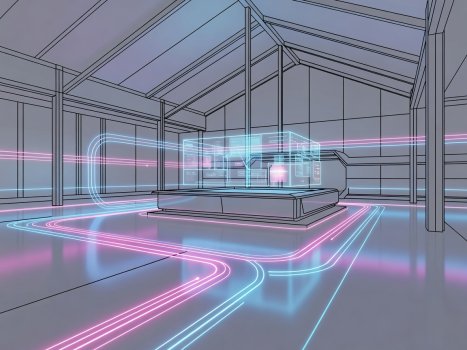
The Rise of Driverless Networks
Modern subway expansion is increasingly focusing on Grade of Automation level 4 (GoA4)—systems where trains operate without any staff on board. Cities like Dubai, Singapore, and Vancouver have proven that fully automated lines are not just feasible, but significantly more efficient. By utilizing Communications-Based Train Control (CBTC), automated systems can safely reduce the distance between trains, moving thousands of additional passengers per hour.
Platform Edge Doors
A crucial component of future subterranean architecture is the Platform Screen Door (PSD). By separating the platform from the track, stations can be fully climate-controlled, preventing the massive heat buildup common in legacy systems. Moreover, PSDs eliminate track intrusions, paving the way for high-speed automated approaches to the platform.
Magnetic Levitation and Vacuum Tubes
While traditional steel wheels on steel rails have dominated for over a century, urban planners are looking deeper underground for the next breakthrough. The concept of underground Maglev trains traveling through depressurized tubes could theoretically allow for transit speeds exceeding 600 miles per hour, turning regional commuting into intra-city rapid transit.