The Arsenalna Plunge
Situated on the Sviatoshynsko-Brovarska line of the Kyiv Metro, Arsenalna holds the title for the deepest station in the world at an astonishing 105.5 meters (346 feet) below the surface. To reach the platform, commuters must ride two consecutive escalators, a descent that takes a full five minutes.
The extreme depth was dictated by the station's geography. Located on the high banks of the Dnipro River, engineers had to bore through solid rock deep enough to bypass the water table and unstable soils near the riverbank.
Tunnel Boring Machines (TBMs)
Modern subterranean architecture relies heavily on the Tunnel Boring Machine, affectionately known as a "mole." These massive cylindrical factories grind through bedrock, clay, and sand while simultaneously installing precast concrete rings to stabilize the tunnel walls. Without TBMs, projects like London's Crossrail (Elizabeth Line) or the Gotthard Base Tunnel would be logistically impossible.
Sub-Sea Transit Tunnels
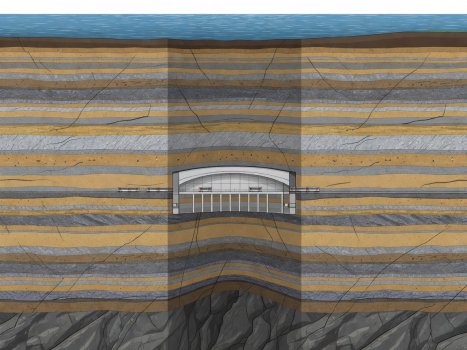
Building beneath cities is complex, but boring beneath the ocean presents unique catastrophic pressure risks. The Seikan Tunnel in Japan and the Channel Tunnel connecting the UK and France represent the pinnacle of deep-water transit engineering, utilizing laser-guided bore alignment to ensure two digging teams meet perfectly in the middle with a margin of error measured in mere millimetres.